
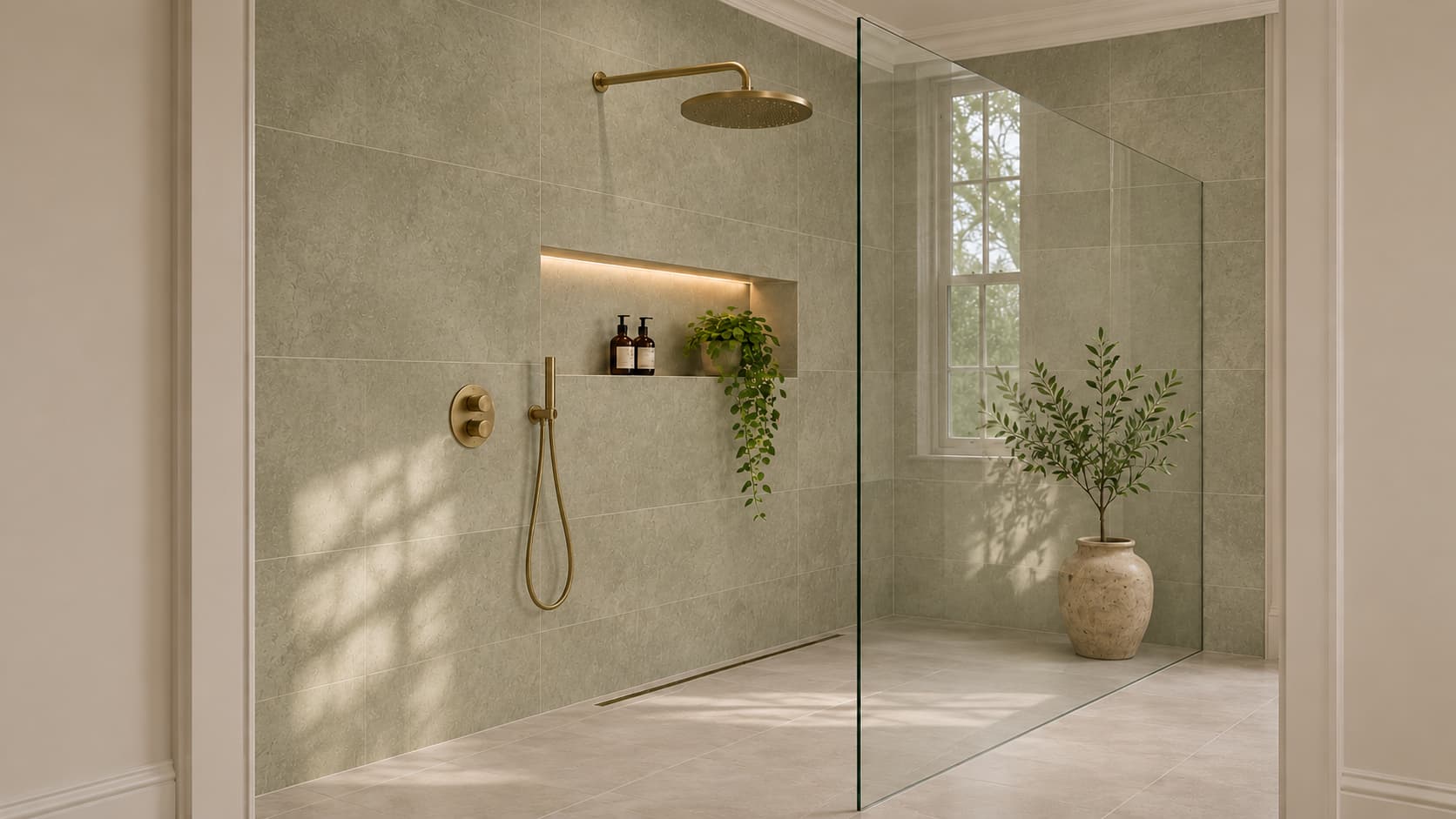
Swapping your bath for a walk-in shower is one of the most popular bathroom upgrades in the UK right now. It frees up space, looks great and makes getting in and out far easier. But what’s the real walk-in shower cost once it’s fitted?
In 2026, replacing a bath with a standard walk-in shower costs around £2,800 on average, with most jobs falling between £1,000 and £5,000. This guide covers prices by type, what pushes the cost up, walk-in shower vs wet room, and help available for accessible showers.
Thinking about a walk-in shower? Get free quotes from vetted, insured bathroom fitters near you.
Average walk-in shower cost in 2026
Here’s what you can expect to pay, fitted:
- Standard walk-in shower with a tray (replacing a bath): around £1,000 to £5,000, averaging about £2,800
- Premium walk-in shower: around £3,000 to £5,000 for a frameless glass screen, large-format tiles and a digital shower valve
- Wet-room style walk-in: around £3,500 to £7,000+ with a tiled floor former and full tanking
- Full wet room: around £4,000 to £10,000, averaging about £6,500
- Accessible walk-in shower from a mobility specialist: around £5,000 to £10,500
Labour for a standard walk-in shower usually runs £600 to £1,200 on top of materials, and most bath-to-shower swaps take 1 to 3 days.
What affects your walk-in shower cost?
- Removing the bath. Taking out a bath and making good the walls and floor adds to the job
- Tray or tiled floor. A shower tray is the cheapest option. A tiled, level floor needs a former and waterproofing, which costs more
- Glass screen. A simple fixed panel is far cheaper than a large frameless or fluted screen
- Tiling. Floor-to-ceiling tiling and large-format tiles push the price up
- The shower itself. Electric, mixer, power or digital showers all vary in price, and some need a new electrical circuit
- Moving the drain. If the shower goes somewhere new, the waste pipe has to follow
- Where you live. Expect higher labour rates in London and the South East
Want to know your exact price? Compare free walk-in shower quotes from trusted local fitters.
Walk-in shower vs wet room: which costs less?
A walk-in shower with a tray is almost always cheaper. It doesn’t need the whole floor waterproofed, and the tray keeps the water contained.
A wet room turns the whole bathroom into the shower area. The floor is laid to fall towards a drain, and the walls and floor are tanked (fully waterproofed). Tanking materials alone typically cost £500 to £1,200, before labour and tiling.
Choose a walk-in shower if:
- You want the look for less
- Everyone using it can manage a small step
- You’re updating rather than fully renovating
Choose a wet room if:
- Someone uses a wheelchair or shower chair
- You want completely level, step-free access
- Your bathroom is small and you want to use every inch
Replacing a bath with a walk-in shower
This is the most common walk-in shower job in the UK. Before you commit, check:
- Resale. Most buyers with young children want at least one bath in the house. If it’s your only bathroom, think about whether you’ll sell soon
- Water pressure. A rainfall or high-flow shower needs good pressure. A combi boiler or a pump may be needed
- Space. A walk-in shower needs enough length for a screen that stops water splashing out, usually at least 1200mm
If your water pressure is poor, the fix might be your boiler. Our guide on whether you can still get a new gas boiler covers boiler swap costs in 2026.
Do you need building regulations for a walk-in shower?
A straight bath-to-shower swap in the same spot doesn’t usually need building regs approval. You will need it if the work involves:
- A new electrical circuit in the bathroom, for example for an electric shower, which is notifiable under Part P
- New connections to the drainage stack
- A new extractor fan on a new circuit
Any bathroom extractor fan should extract at least 15 litres per second under Approved Document F. LABC explains which bathroom jobs need approval.
Can you get a grant for a walk-in shower?
Yes, if it’s needed because of a disability. A Disabled Facilities Grant from your local council can pay up to £30,000 in England for adaptations such as a level access shower. It’s means tested for adults, and you must apply and get approval before work starts.
There’s no general grant for a walk-in shower installed for style or convenience.
Need an accessible shower fitted? Get free quotes from vetted local fitters.
How to keep your walk-in shower cost down
- Use a shower tray rather than a tiled, level floor
- Keep the shower where the bath was, so the waste pipe stays put
- Choose a fixed glass panel instead of a large frameless screen
- Tile the shower area only and use bathroom paint elsewhere
- Get at least three itemised quotes and compare them line by line
Planning a bigger refit? Our bathroom replacement cost guide breaks down full bathroom prices for 2026.
Ready to swap your bath? Get free quotes from vetted, insured bathroom fitters near you.
FAQs
What is the average walk-in shower cost in the UK?
Replacing a bath with a standard walk-in shower costs around £2,800 on average in 2026, with most jobs between £1,000 and £5,000.
How long does it take to fit a walk-in shower?
A standard bath-to-shower swap usually takes 1 to 3 days. Wet rooms and jobs with new drainage take longer.
Is a walk-in shower cheaper than a wet room?
Yes. A walk-in shower with a tray is almost always cheaper because a wet room needs the whole floor and walls waterproofed.
Does removing a bath devalue my house?
It can if it’s your only bath, as many buyers with children want one. If you have a second bathroom with a bath, it’s rarely a problem.
Can I get a grant for a walk-in shower?
Only if it’s needed for a disability. The Disabled Facilities Grant can pay up to £30,000 in England, but you must apply before work starts.
Do I need building regs for a walk-in shower?
Not for a like-for-like swap. You will if you add a new electrical circuit or new drainage connections.
Get your walk-in shower sorted. Compare free quotes from trusted, vetted fitters today.